Verb Conjugation


Verb Conjugation in Ancient Languages

Verb Conjugation in Minority Languages


Noun Declension
Other Language Information
Featured Language: Pictish
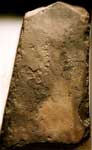
Introduction. The Pictish language was spoken by the Picts, the people of northern and central Scotland in the Early Middle Ages. It was spoken until 10th century. There is very little direct a[...]
Read more about Pictish at docs.verbix.com.
Tagged Books & Texts
Featured Text: La porte des rêves
A book by Marcel Schwob. French: LA FLÛTE. . La tempête nous avait poussés très loin des côtes où nous avions accoutumé de faire la course. Pendant de longues journées sombres, le navire avait plongé, le nez en avant, à travers les masses d' eau verte crêtelées d' écume. Le ciel noir semblait se rapprocher de l' Océan, même au-dessus de nos têtes; l' horizon seul était entouré d' une marque livide, et nous errions sur le pont comme des ombres. Des fanaux pendaient à chaque vergue, et le long de leurs verres suintaient perpétuellement les gouttes de pluie, si bien que la lumière en était incertaine. À l' arrière, les hublots de l' habitacle du timonier luisaient d' un rouge transparent et humide. Les hunes étaient des demi-cercles d' obscurité; de la noirceur supérieure, dans les sautes de vent, émergeaient les voiles blêmes. Quelquefois les lanternes, en se balançant, faisaient se refléter des lueurs de cuivre dans les poches d' eau des prélarts qui couvraient les canons..
Tagged Paralleltexts
Featured Text: Vulgata: Old Testament
Vulgata is the Bible written in Latin. This page contains the Old Testament. Latin: in principio creavit Deus caelum et terram. terra autem erat inanis et vacua et tenebrae super faciem abyssi et spiritus Dei ferebatur super aquas.
  English: In the beginning God created the heaven and the earth.. And the earth was without form, and void; and darkness was upon the face of the deep. And the Spirit of God moved upon the face of the waters..
Verb Cognates
Cognates are words that have a common etymological origin.
Language Maps
Find language related maps here!
About Verbix
Verbix is an independent non-profit organization that aims to promote and protect linguistic diversity. This site and the Verbix for Windows software support verb conjugation in hundreds of languages, ranging from national and international languages to regional and even extinct languages.
If you find any of the services useful or want to contribute to the promotion of the linguistic diversity feel free to support us! Support Verbix
About Verb Conjugation
Verb conjugation is the creation of derived forms of a verb from its principal parts by inflection. Principal parts is sometimes the infinitive like "cantar" in Spanish, but it can also be verb theme like "skriva - skrev -skrivit" in Swedish. Read more...